

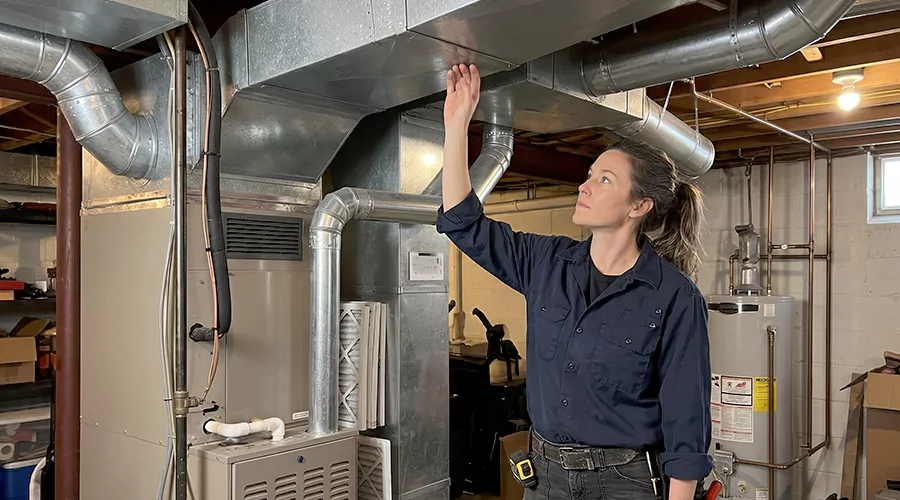
HVAC ductwork commonly pops or bangs because metal ducts expand and contract with temperature changes or flex under changing air pressure. Other possible causes include loose duct connections, inadequate supports, restricted airflow, and improperly sized ductwork. Occasional light popping may be harmless, but frequent or unusually loud banging should be investigated.
Heating and cooling systems move conditioned air through a network of ducts. When the furnace starts, warm air can heat the metal duct surfaces quickly. When the air conditioner operates, the ducts may experience different temperature and pressure conditions. These changes can produce clicking, popping, or banging sounds, particularly in sheet metal ducts. However, not every noise originates from thermal expansion. Airflow restrictions and equipment problems can create similar symptoms. If the noise results from improperly sized or poorly designed ducts, professional HVAC ductwork installation may help correct the underlying issue and improve airflow. Understanding when the noise occurs can help homeowners determine whether the problem involves normal metal movement or a condition requiring professional repair.
Why Does HVAC Ductwork Make Popping Noises?
Metal ducts respond to temperature changes by expanding when heated and contracting when cooled. As the material moves against nearby supports or framing, it may produce clicking or popping sounds. This old house identifies thermal expansion and contraction as common explanations for noises occurring when heating equipment starts or stops.
Changes in air pressure can also cause thin sheet metal panels to flex inward or outward. This movement is sometimes called oil canning because it resembles the sound produced when the bottom of a metal can flexes.
Common Causes of HVAC Duct Banging
| Possible Cause | Typical Sound | When It Occurs |
|---|---|---|
| Thermal expansion | Clicking or popping | During heating startup |
| Metal contraction | Ticking or popping | After equipment shuts off |
| Oil canning | Loud pop or bang | When blower starts or stops |
| Loose duct supports | Rattling or knocking | During airflow |
| Restricted return airflow | Rumbling or banging | During blower operation |
| Undersized ducts | Repeated popping or noise | During high airflow |
| Duct rubbing against framing | Sharp popping | During temperature changes |
| Equipment malfunction | Loud mechanical bang | Near furnace or air handler |
The sound's location and timing can help identify its source, although professional testing may be necessary.
1. Metal Ducts Expand and Contract
Thermal expansion is one of the most common reasons ducts pop during heating operation. When warm furnace air enters a cooler metal duct, the material expands slightly. If a duct panel rubs against framing or another metal component, the movement may create an audible pop. As the system cools after shutdown, the metal contracts and may produce another sound. A few light noises during temperature changes are not necessarily signs of a defective HVAC system. However, loud or worsening noises may indicate that the duct is poorly supported or contacting nearby construction.
2. Air Pressure Causes Oil Canning
Oil canning occurs when a sheet metal duct panel flexes as pressure changes. When the blower begins operating, pressure inside the duct can move a relatively flexible panel. When the blower stops, the panel may return to its original position with a popping sound. This old house describes oil canning as a common source of rumbling or banging noises in metal ducts. Thin, broad rectangular panels can be particularly susceptible. Proper reinforcement and support may reduce the movement.
3. Dirty Air Filters Restrict Airflow
A heavily loaded HVAC filter creates additional resistance to airflow. This restriction can contribute to pressure changes that make some ducts noisier, particularly on the return side. Inspect the air filter and replace it according to the equipment manufacturer's instructions. Do not install a filter with a higher resistance rating without confirming that the HVAC system can accommodate it. If popping continues after filter replacement, additional pressure or duct problems may be present.
4. Supply and Return Vents Are Blocked
Closed supply registers and obstructed return grilles can increase airflow resistance. The department of Energy recommends maintaining properly sized, unobstructed supply and return pathways. Check whether furniture, rugs, curtains, or stored objects are blocking any major vent openings. Avoid closing multiple supply registers to redirect conditioned air. This can increase system pressure and make duct noise worse.
5. Ductwork Is Poorly Supported
Ducts need suitable supports that maintain their shape and prevent unnecessary movement. A loose metal trunk may vibrate against a joist or another duct section when the blower operates. Temperature changes can also create noise where metal contacts framing. The appropriate repair may involve adding approved supports, correcting loose fittings, or providing suitable isolation at contact points. Do not fasten ducts indiscriminately to electrical wiring, plumbing pipes, or other building services.
6. The Ductwork Is Too Small
Undersized ducts can create excessive resistance when the blower attempts to move the required airflow. Higher pressure differences may contribute to duct panel movement and noise. ACCA Manual D provides recognized residential duct sizing methods. A contractor can evaluate whether the supply and return network matches the equipment's airflow requirements. Adding reinforcement to a noisy duct may reduce the sound without correcting an underlying sizing problem. Both should be considered.
7. Ducts Rub Against Building Framing
Metal ducts passing through narrow spaces may contact wood framing, drywall, or other construction materials. As the duct expands, friction can create a sudden pop. This old house describes using suitable rubber isolation pads at certain metal-to-wood contact points to reduce noise. The installer should preserve required duct supports and any applicable fire-safety clearances while making adjustments.
How to Stop HVAC Ductwork From Popping or Banging?
Begin with simple observations before modifying the duct network.
Step 1. Identify When the Noise Happens
Listen for whether the sound occurs during startup, shutdown, or continuous operation. A pop during temperature changes may indicate thermal movement. A bang exactly when the blower starts may suggest pressure-related panel flexing.
Step 2. Locate the General Area
Determine whether the noise comes from a ceiling, basement trunk, return duct, or equipment cabinet. Do not open operating furnace cabinets to investigate internal noises.
Step 3. Check the Air Filter
Replace a dirty filter with a suitable product. A heavily restricted filter can affect blower airflow and system pressure.
Step 4. Inspect Room Registers
Confirm that the registers are open and unobstructed. Remove furniture or household items blocking return grilles.
Step 5. Examine Accessible Duct Supports
Look for loose hangers, vibrating metal panels, or ducts pressing against framing. Avoid entering unsafe attics or crawlspaces.
Step 6. Request Static Pressure Testing
An HVAC technician can measure static pressure and determine whether the duct system is excessively restrictive. The results should be compared with the equipment manufacturer's specifications.
Step 7. Repair or Reinforce the Ductwork
Depending on the findings, a contractor may add suitable supports, isolate contact points, reinforce large panels, or correct restrictive fittings. The repair should address the identified cause rather than merely conceal the sound.
Is It Normal for Ducts to Pop When the Heat Turns On?
Occasional clicking or light popping can occur as metal ducts warm and cool. However, repeated loud bangs, visible duct movement, or newly developing noises deserve inspection. A particularly important distinction involves a loud boom originating from a gas furnace at burner ignition. This may indicate an ignition problem rather than ordinary duct expansion. If a gas furnace produces an unusual loud boom at ignition, stop using it and arrange qualified service. If a gas leak is suspected, evacuate and contact emergency services or the gas utility.
When Should You Call an HVAC Professional?
Professional inspection is appropriate when the noise is loud, frequent, or accompanied by weak airflow. A technician can check duct supports, measure pressure, evaluate airflow, and inspect equipment operation. Duct popping accompanied by unusual furnace ignition sounds should receive prompt attention. Do not assume every bang comes from ordinary sheet metal movement.
How Can You Prevent Ductwork Noise?
Proper duct design and maintenance can reduce preventable noise. Maintain suitable filters, keep return pathways open, and avoid randomly closing supply registers. During duct installation, contractors should provide adequate support and appropriate reinforcement. Suitable transitions and isolation materials may also reduce transmitted vibrations. Annual HVAC maintenance can identify airflow restrictions and equipment issues before they develop into larger problems.
Conclusion
HVAC ductwork commonly pops or bangs because of temperature changes, pressure-related panel movement, or loose supports. Occasional light popping may be normal, but persistent banging can indicate airflow restrictions or duct construction problems. Check filters and vents before arranging professional inspection. A qualified technician can evaluate static pressure, duct support, and equipment operation to identify the appropriate repair.